Frequently asked questions
About CoralFactory
-
The corals in our pilot facility in Utrecht come from Wageningen University and Research (WUR). WUR grows coral for scientific studies and sometimes ends up with more coral than they need for their experiments. Instead of letting these surplus corals go unused, we are allowed to receive them. This gives the corals a new purpose and allows us to test and improve our Coral Factory systems.
-
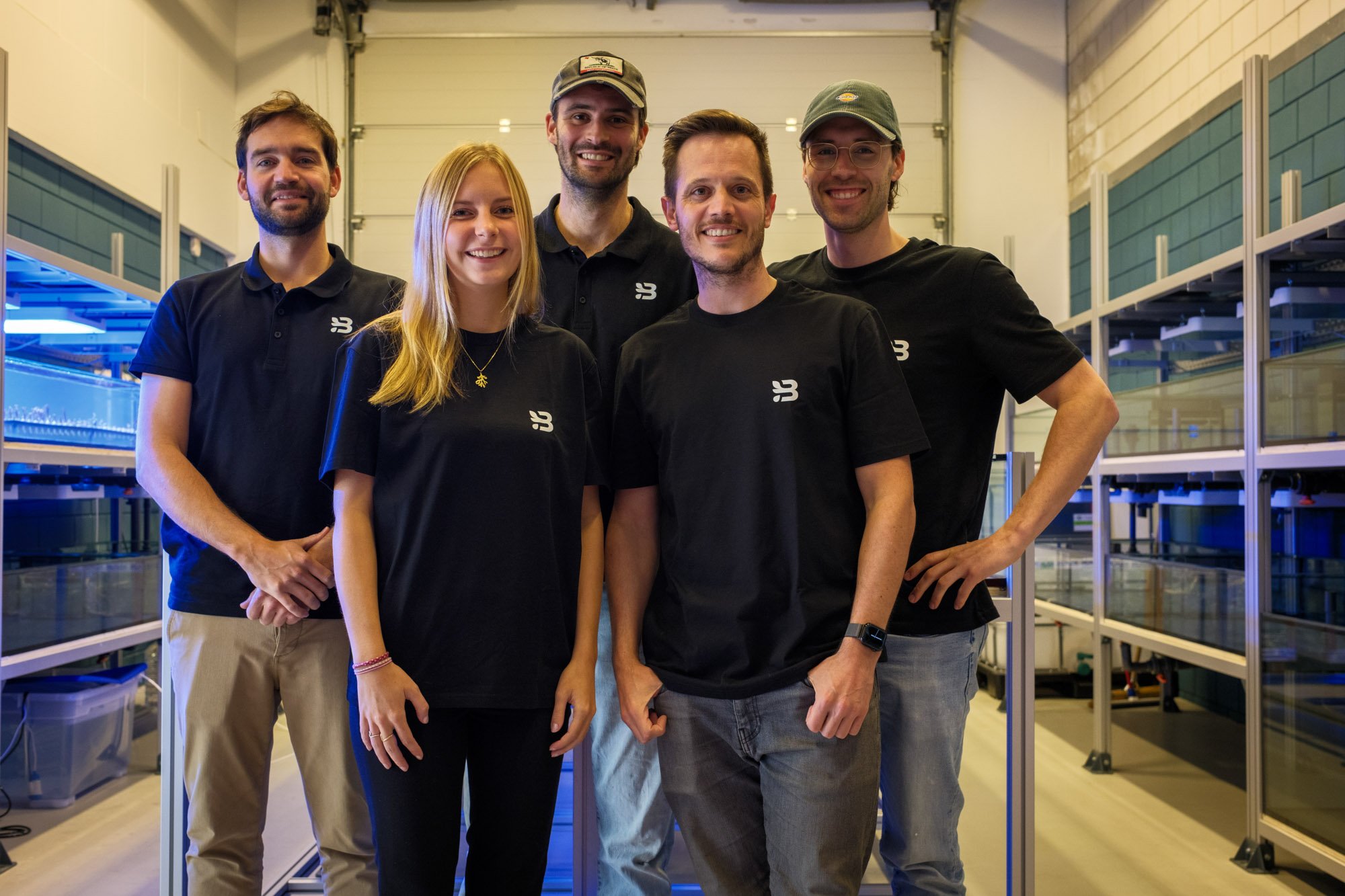
Our location in The Netherlands is the heart of our organization. It is our technical development hub, research facility and a showroom for education and awareness. The corals we grow here are used exclusively for research, system optimization and educational purposes. They are not shipped abroad or returned to the ocean.
-
Most restoration efforts focus on growing and replanting coral itself, a process that is slow and has to be repeated for every species. We focus on the algae living inside coral instead. Because these algae reproduce in days rather than years, and a small number of algae types support many coral species, improving them lets us strengthen multiple species at once, faster and at greater scale than traditional restoration
-
Scaling up coral production is important, but it is not enough on its own. For restored reefs to survive rising ocean temperatures, corals must become more heat tolerant. That is why we work closely with Wageningen University on Project SuperCoral, a groundbreaking research program focused on improving the heat tolerance of the coral algae.
By combining large scale production with scientific innovation, we aim to give future reefs a real chance to adapt and thrive in a warming world.
If your question is not listed, feel free to get in touch.
About SuperCoral
-
Yes. Accelerating coral adaptation raises ethical concerns because introducing stronger, human-enhanced corals could cause unexpected ecological changes. These corals might, for example, outcompete native species, behave like invasive organisms, spread diseases, or change the genetic makeup of natural populations. Therefore, careful ecological risk–benefit analysis, regulatory oversight, and public dialogue are considered essential before implementation.
-
If stronger “Super Corals” are introduced, the reef may adapt by becoming more tolerant to stress such as heat. These corals could pass on beneficial traits, work with new microbial partners, or create more resilient offspring. However, the long-term ecological outcomes remain uncertain, and success depends on careful monitoring, compatibility with native populations, and maintenance of ecological balance.
-
Heat tolerance of corals depends largely on the photosymbionts (formerly known as zooxanthellae) that live inside their tissues. By manipulating these photosymbiont communities, it may be possible to enhance corals’ ability to withstand summer heatwaves. Although both heat-tolerant and -sensitive photosymbiont species occur naturally, even corals that host the more tolerant types can still bleach during extreme warming events. Researchers have used experimental evolution, growing photosymbiont cultures for many generations at elevated temperatures, to increase their upper thermal tolerance. In some cases, these heat-evolved photosymbionts were successfully reintroduced into corals.
Check article -
The Caribbean coral Favia fragum is used in our research because it is a brooding coral. Brooding corals fertilize and develop their larvae internally, and then release fully formed planula larvae. The larvae usually inherit their photosymbionts directly from the parent colony. This means that the offspring start life with the same photosymbiont community as the adults, which makes Favia fragum an ideal species for studying how heat-evolved photosymbionts are passed on and how they influence heat tolerance of the coral.
If your question is not listed, feel free to get in touch.
About CoralArc
-
Our partner REEFolution has strong experience with traditional outplanting methods, such as placing corals on the reef through scuba diving. This works well for small to medium scale projects. But because our ambition is to produce coral at much larger scales, we are exploring new outplanting techniques that can match that level of impact.
We are currently in the development phase and working with different partners to identify and test large scale, efficient and nature friendly outplanting methods. As CoralArc grows, these methods will evolve with it.
-
Every facility we build is designed to be operated by the people who know the reef best: the local team. In Kenia, we work closely with REEFolution to train local staff in system operation, coral husbandry, and water quality monitoring, using the same protocols developed at CoralFactory. The goal is always the same: within a defined period, the local team runs the facility independently, with BRANCH remaining available for remote support and knowledge sharing through the BRANCH Data Network.
-
We look for locations where local partners bring on-the-ground experience, established relationships with government for permitting, and access to scientific expertise, such as universities that can contribute to algae research. Local support and government backing are equally essential, since long-term success depends on the community and authorities being part of the process from the start.
Kenya is a clear example of how this comes together. REEFolution had been restoring reefs there using traditional methods for years, until they lost an estimated 65% of their farmed and transplanted coral to extreme heat. That loss is what brought them into contact with BRANCH, looking for an approach that could make their restoration work resilient to a warming ocean. Together with REEFolution and Wageningen University & Research, we selected the Shimoni-Vanga seascape as our first facility. As we grow toward ten facilities worldwide, we look for reefs facing similar challenges, where local partnerships like this one can make adaptation possible.
If your question is not listed, feel free to get in touch.